Showing posts with label horse. Show all posts

Friday, May 11, 2012

O'Brien Winner Doesn't "Knee"d Surgery


While most champion four-year-olds are either occupied in the breeding shed or prepping for the upcoming stakes season, Up The Credit is earning a little extra credit doing double duty this spring.
Following a million-dollar sophomore campaign which included a victory in the $1.5 million North America Cup and divisional honours at the O’Brien Awards, trainer Carl Jamieson and his partners Thomas Kyron, Joanne Morrison, and Brian Paquet decided the son of Western Terror out of the Pacific Rocket mare Cantbuymehappiness would become a sire and continue to race as a four-year-old.
With Jamieson heading south to Florida for winter training, Up The Credit was placed with conditioner Mark Horner while he stands stud at Seelster Farms.
“Mark’s doing me a great deed by training him this winter and breeding him for me because he’s only 15 minutes away from Seelster Farms,” noted Jamieson, who will be returning home at the end of April.
“I picked him up December 29 to be exact,” said Horner from his St. Mary's, Ont. farm last week. “He jogged light until the first of February and then he started training. He’s been training now in 2:15 and that’s at home in the jog cart.”
Horner says Up The Credit gets his training sessions in between his Monday-Wednesday-Friday breeding schedule.
“He’s been a busy boy,” said Horner. “I don’t have the exact numbers as to how many mares he’s bred, but I know he’s been busy. Hopefully it stays that way.”
Near the end of his sophomore year, Up The Credit looked to be facing surgery on a knee that was injured as a freshman and had resulted in some calcification around the area once it healed. However, Jamieson says the issue has cleared up with some TLC and the procedure is no longer needed for him to continue racing.
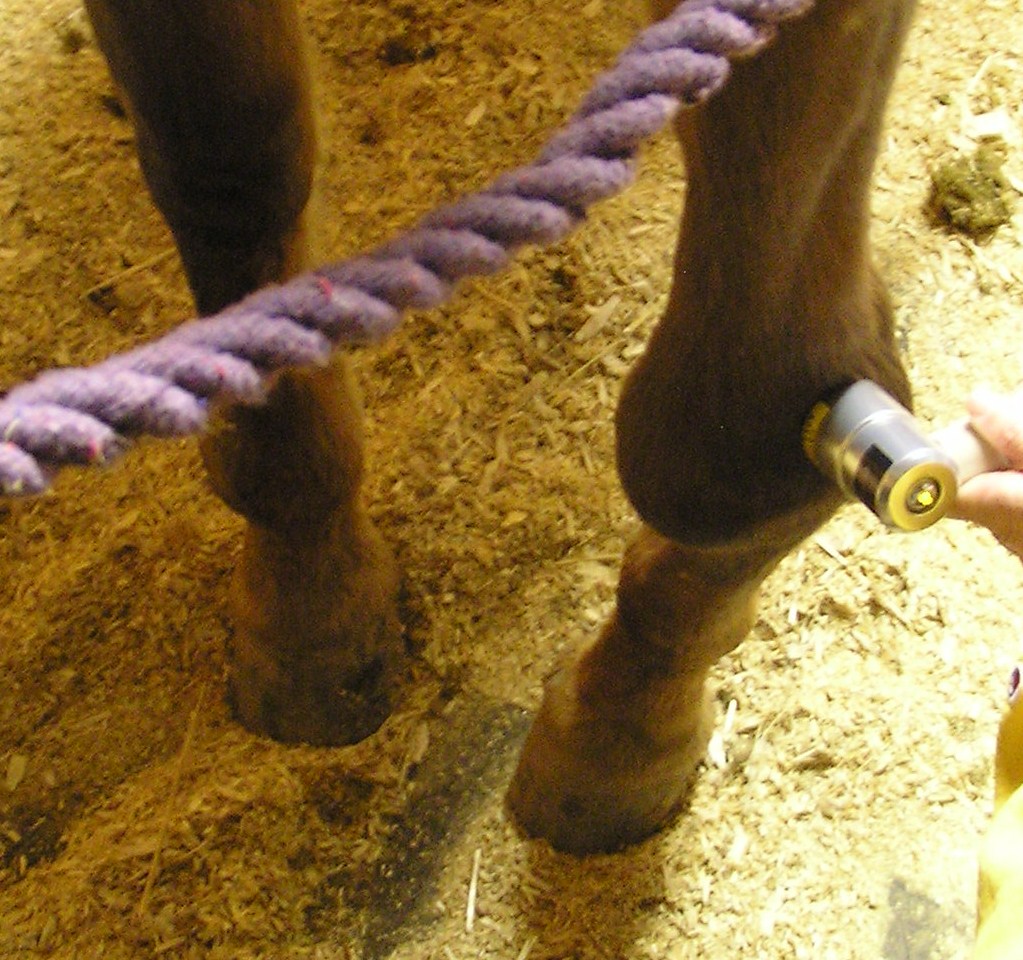
“He’s 100 per cent,” confirmed Jamieson, who was nominated on the ballot for this year’s Canadian Horse Racing Hall of Fame inductions. “We thought last Fall we might have to do surgery on the knee, but we were using the laser on him all summer and fall and it healed the knee up and everything’s the same as he was born with. He never had surgery and he’s 100 per cent ready to go.”
“He seems to be in good shape and I’m really happy with his conditioning right now,” added Horner. “I think he’s good to go.”
Up The Credit is expected to qualify mid-April in preparation for the Molson Pace eliminations on May 18 at Western Fair Raceway. He has also been nominated to a handful of other open stakes including the Ben Franklin, Des Smith, Canadian Pacing Derby, U.S. Pacing Championship, and Breeders Crown.
“Obviously it’s tough and there’s a lot of nice horses out there,” said Horner of the step up in competition Up The Credit will face. “Anytime a four-year-old goes into the older pacing ranks it's tough so hopefully we’ve picked the right spots and he’s in great shape and he has lots of luck. I hope that he’s ultra competitive and I really can’t see why he wouldn’t be if he brings it up to the next level.”
Meanwhile, Up The Credit’s younger stablemate and fellow O’Brien Award winner Warrawee Needy is on track to follow in his footsteps down the road to North America Cup 29. More on him in the coming weeks as Trot Insider.


Up The Credit uses Theralase's Cold Laser Therapy for its knee issues. For more information please call 1-866-843-5273 or visit www.theralase.com.

Friday, February 17, 2012

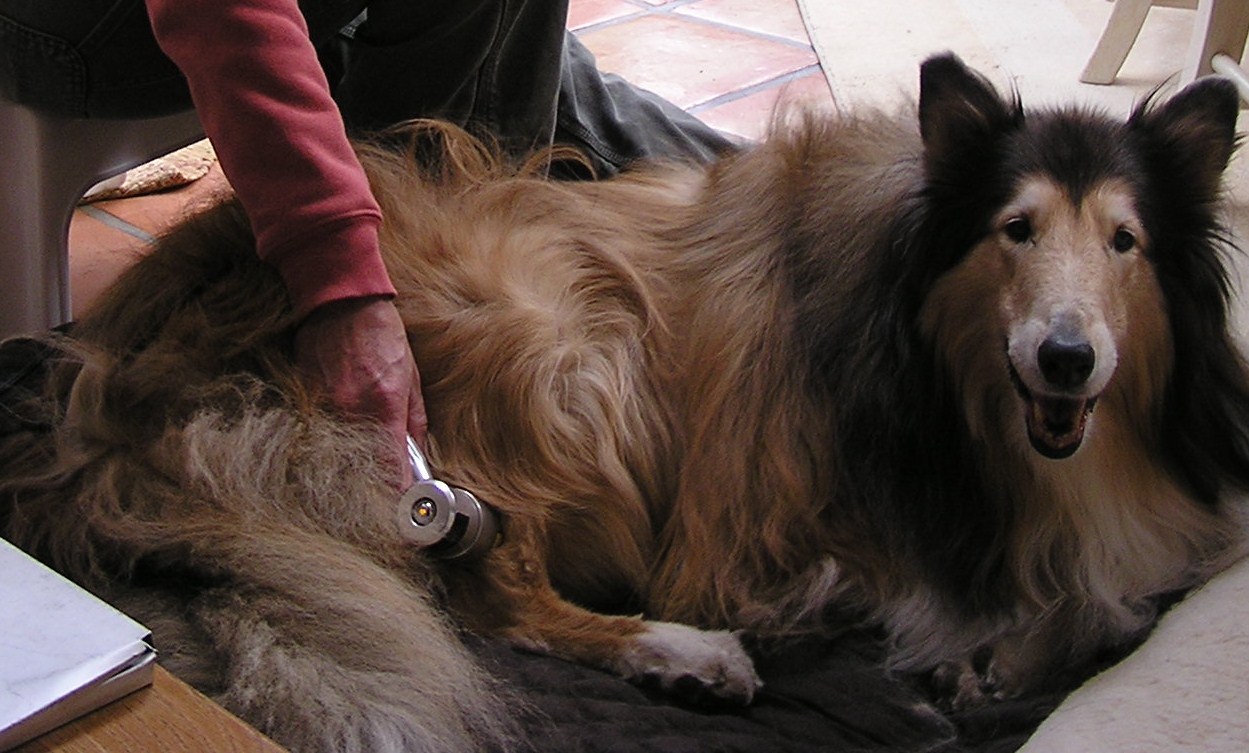
Pain Relief and Healing at the Speed of Light for Companion Animals and Horses

Just what is laser therapy? Many people know this kind of treatment as “Low Level Laser Therapy” or “Cold Laser Therapy”. Most people think of surgical lasers or Star Wars and think the treatments will hurt. Actually, it is a very safe, painless, and effective way of treating injuries, pain and many medical conditions.
Laser Therapy is a method of treatment where laser light is applied to tissues with a low light intensity so that heating is negligible and a therapeutic influence is produced. The effect achieved is produced by the light creating a photobiostimulation in the tissues at a cellular level – modulating cellular function.
The minimal heat produced by the laser light is a negligible contribution to the therapeutic effect. This is quite different from surgical lasers where a strong laser light is used and the subsequent heat produced creates a cutting, evaporating or coagulating effect. The benefits in low level laser therapy are seen in improved healing time, pain relief, reduced swelling, increased circulation and increased range of motion. Numerous studies have been conducted in human medicine lending support to its use as a therapeutic medical device to improve healing time, decrease inflammation and relieve pain.


The Main Biological Effects of Laser Light:

• Pain relief
• Reduced inflammation
• Increased blood flow to injured tissues
• Accelerated tissue repair and cell growth
• Accelerated wound healing
• Reduced formation of scar tissue
• Improved nerve function

Laser therapy is gaining in popularity in human rehabilitation medicine as well as in veterinary medicine. It is particularly attractive for the treatment of athletes–human, canine, and equine– due to the potential of a shortened recovery time and the effectiveness of lasers in treating musculoskeletal disorders. But while laser therapy is very useful for injuries, it is far from limited to sports medicine. It has proven to be effective in decreasing the amount of time needed for wound and fracture healing


Pain Relief and Healing at the Speed of LightConditions treatable with Laser Therapy include:


• Arthritis
• Neck and back pain
• Joint pain
• Muscle strain or injury
• Tendon injuries
• Ligament Sprains
• Hoof pain
• Post-surgical pain and healing
• Fracture healing
• Edema (swelling)
• Wound Healing
• Burns
• Neurologic conditions
• Rehabilitation


How does it work?

The laser light interacts with tissues at the cellular level by increasing metabolic activity. This leads to an increase in the production of ATP (cellular fuel) and thereby a cascade of events leading to increased cellular reproduction, function and health.

On a systemic level, the laser energy increases circulation by inciting vasodilation (increasing the diameter of blood vessels leading to increased blood flow to the tissues). This serves to increase the transportation of specific healing enzymes, oxygen and nutrition to damaged tissues while increasing the removal of cellular debris and toxins. As a result, all cells and thereby all tissues, are repaired faster. In addition, the laser light increases the formation of new capillaries in damaged tissue (angiogenesis) and fibrous tissue; contributing to the speeding up of healing as well as reducing the formation of scar tissue. The laser light also activates lymphatic drainage helping to reduce inflammation.
Damaged nerve cells are particularly slow to heal and this can lead to neurologic deficits such as numbness and impaired function. Laser light can help speed up the cellular regeneration of the nerve axons and help improve recovery time. It also seems to be helpful in slowing down the progression of some degenerative nerve diseases – possibly by increasing the amplitude of action potentials to optimize muscle action.
Perhaps most importantly, laser therapy has an analgesic effect by attacking pain on different levels. The laser light has an effect on nerve cells by blocking pain transmitted by these cells to the brain and decreasing nerve sensitivity. The laser therapy decreases inflammation – this also helps decrease the pain being caused by the edema. At the same time, the laser light stimulates the central nervous system to signal the brain to release pain blocking chemicals such as endorphins, enkephalins, and opioids. In addition to the analgesic effect, these chemicals have a relaxing, sedative effect on the patient. If done correctly, there is little or no sensation during laser therapy.


Pain Relief and Healing at the Speed of Light
Most patients seem to genuinely enjoy their treatments and no patient sedation or restraint is needed.
Laser light can also be used to stimulate acupuncture points. This non-invasive technique is especially useful for animals that do not take to being needled. This can be used for all the same syndromes as acupuncture but is especially effective for muscle trigger points and providing musculoskeletal pain relief.


How is treatment done?

Treatment time varies depending on the size of the area being treated, the size and thickness of the animal being treated, the type of tissue being targeted, and the type of machine being utilized. Typically, treatment time is 3 to 8 minutes.

Initially, treatment for some acute conditions may be performed daily. More chronic conditions should initially be treated 2-3 times a week. This will be tapered down as improvement occurs – usually to once or twice a week.
Some conditions, may display immediate improvement and only require 1-2 total treatments while others may require 6-12 treatments. Treatments are cumulative when done over a short time period and in some cases, it may take 3-4 sessions before a change is notable in the condition. Some chronic conditions may require ongoing treatment or a maintenance program in which treatment occurs periodically as needed.
Treatment programs and plans need to be tailored to the individual animal and that animal’s issue. It is critical to have a correct veterinary diagnosis and treatment plan to avoid inhibiting healing.


Take home message

The use of therapeutic lasers in small and large veterinary practices is becoming more and more popular as veterinarians recognize its use as a painless and effective means of reducing pain and improving healing. The simple means of application and safety in use allow for a tool to treat many types of injuries and medical conditions. This is useful as an adjunct to traditional medicine or when medication may not be ideal. Many animals resist taking medication, their owners are not comfortable in delivering medication, or the animal is fractious and resistant to rehabilitative treatment. In addition, there are many patients for whom analgesic (pain) medication is ineffective or who may not be able to take analgesic medications. Laser Therapy is an easy and effective alternative.

Laser Therapy is a non-invasive and extremely gentle form of treatment with virtually no side-effects. However, the use of a laser as a medical device should be done by veterinary medical practitioners to ensure that an adequate diagnosis has been obtained prior to treatment so that the use of the laser does not inhibit healing and more effective medical treatment is not being overlooked.
Depending on the initial condition, effects from laser therapy may be seen immediately. Some cases even resolve after one or two treatments while other chronic conditions, such as arthritis, continue to be seen on a regular basis to maintain the animal’s comfort.


For further information, please call 1-866-843-5273 or visit www.theralase.com